


Wordle Nyt Game
About Company
Wordle (NYT) — A Comprehensive Overview
Wordle, the simple daily word-guessing game popularized by The New York Times (NYT), became a cultural phenomenon shortly after its 2021 debut. This article explores what Wordle is, why it resonated so widely, gameplay mechanics, strategies, criticisms, and its broader cultural and cognitive implications.
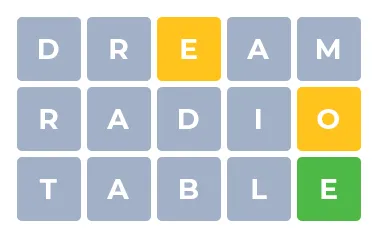
What is Wordle?
Wordle Nyt is a minimalist web-based game where players have six attempts to guess a single five-letter target word each day. After each guess, the game gives feedback with three color-coded cues:
Green: correct letter in the correct position.
Yellow: correct letter in the wrong position.
Gray: letter not in the target word.
There is one new puzzle per day, the same for all players, encouraging shared experience and discussion.
Why it became popular
Several factors drove Wordle’s rapid spread:
Simplicity and accessibility: no account or app required, instantly playable on any browser.
Social sharing: a share button posts a compact emoji grid of results without spoilers, fueling social media engagement.
Scarcity and ritual: one puzzle per day creates anticipation and communal participation.
Cognitive satisfaction: the game offers a concise, solvable challenge—strategic but quick.
Gameplay strategies
Effective strategies blend vocabulary knowledge with deduction:
Start with a strong opening word containing common vowels and consonants (e.g., “ARISE,” “CRANE,” “SLATE”).
Use second guesses to maximize information rather than always trying to brute-force the solution.
Track letter frequency and positional likelihoods; avoid repeating gray letters unless later evidence contradicts the initial feedback (account for double letters).
Preserve guesses to test hypotheses about letter placement in later attempts.
Examples:
If first guess yields two yellows and one green, use the next guess to rearrange yellow letters while introducing new common letters.
When you suspect a double letter (e.g., common doubles like L, S, E), consider words that include duplicates.
Variations and spin-offs
Wordle inspired numerous variants: different word lengths, themed puzzles (e.g., geography, math), multiplayer and timed versions, and accessibility-focused adaptations. Some apps add daily streaks, leaderboards, or hint systems—features Wordle deliberately omits to keep the original crisp.
Criticisms and limitations
Wordle is not without critique:
Vocabulary bias: answers skew toward common English words, but obscure or culturally specific words can frustrate non-native speakers.
Repetition risk: one puzzle per day reduces burn-out but also limits engagement for avid players.
Accessibility: color-based feedback can be problematic for color-blind players (though NYT includes pattern markers to help).
Commercialization: after NYT acquired Wordle, some users worried about monetization or feature changes.
BLOG:
https://piventa.com/wordle-nyt-a-comprehensive-overview/
https://discoverydell.com/wordle-nyt-a-comprehensive-overview/
https://nexthypezone.com/wordle-nyt-a-comprehensive-overview/
https://trendverity.com/wordle-nyt-a-comprehensive-overview/
https://geniusvision.world/wordle-nyt-a-comprehensive-overview/